
When it comes to stunt riding, tank tricks open up an entirely new range of progression. Riders can spend years building skill on the street or in the lot, yet still be limited by a stock tank- often without fully realizing what tricks like spreaders, highchairs, or more advanced transitions even require from the bike.
Once you start looking at tanks that make those tricks possible, there’s no single “best” solution. What works depends heavily on your riding style, goals, and how much downtime or permanent modification you’re comfortable with. Tank setups vary wildly in material, shape, depth, lip design, coverings, and overall feel- and all of those factors change how the bike behaves under you.
Today, the most common route riders take is a fully fabricated stunt tank. Custom fabbed tanks have proven themselves over time and continue to be the go-to solution for riders who want a highly tailored setup.
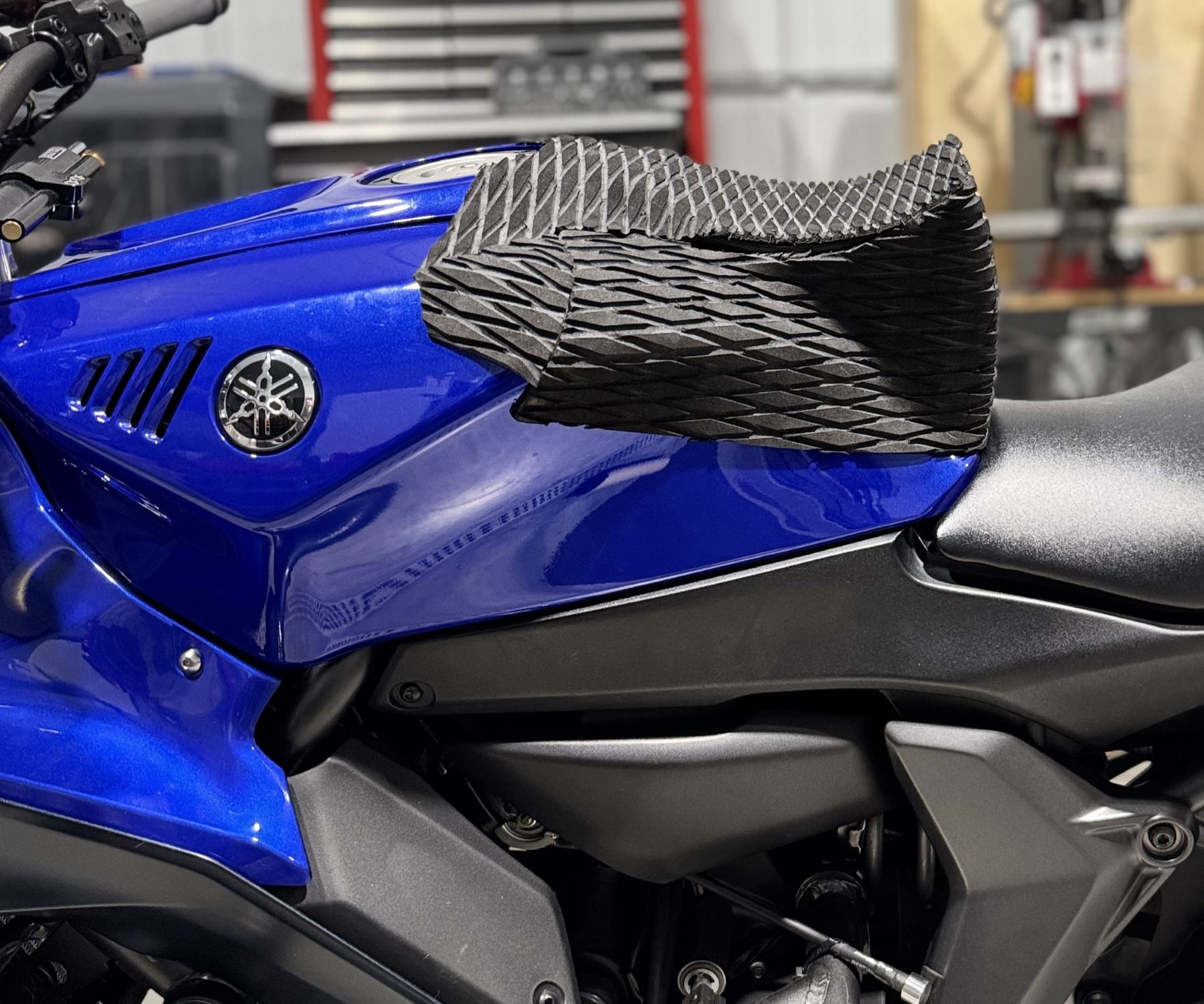
With the low-profile design of the R7 and MT-07 fuel tanks, we saw an opportunity to explore something different: a bolt-on tank kicker that opens the door to tank tricks while leaving the OEM tank untouched.
Both approaches come with real advantages. Both come with compromises.
Fabbed Stunt Tanks
A properly fabricated stunt tank is still the gold standard for many riders- especially those deep into tank tricks.
✅ Pros
- Built exactly to your riding style and body position
- Can be shaped with a deeper, more aggressive lip
- Excellent lock-in for advanced tank tricks
- Clean, one-piece solution when done right
Fabricators like WONK333 do legitimately great work. Their tanks are well-known in the community, and for riders who know exactly what they want, a custom fabbed tank can be unbeatable.
❌ Cons
- Permanent modification to your OEM tank
- Some don’t like the idea of playing with the fuel tank venting
- Pinhole leaks are a pain to deal with
- Downtime while your tank is cut, welded, and refinished
- Shipping cost + lead time
- Higher total cost once labor, shipping, and paint are factored in
If you ride constantly and don’t want your bike down for weeks or don’t want to permanently alter your OEM tank- this can be a deal-breaker.
Bolt-On Tank Kickers
Bolt-on tank kickers were designed to solve a very specific problem:
adding tank functionality without permanently modifying the bike.
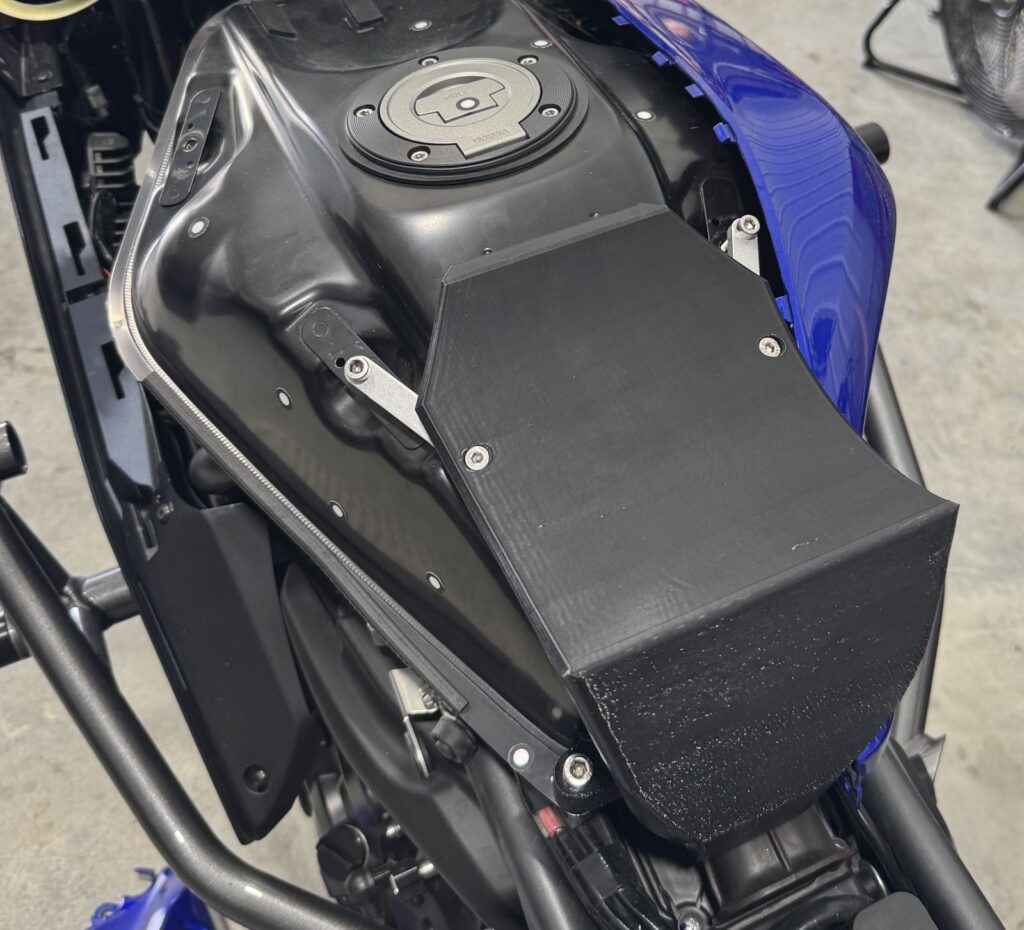
Our goal with the R7 bolt-on tank kicker was never to replace a fully fabbed tank, it was to offer a reversible, low-downtime option that still delivers real stunt function.
✅ Pros
- No welding or permanent tank modification
- Can be installed or removed as needed
- Minimal downtime – no sending parts out
- Keeps your OEM tank intact
- Great for learning tank tricks, spreaders, and high chairs
As mentioned in our product description and community replies, this setup feels closer to a narrow, flat-top tank rather than a deep bowl. It takes some adjustment time, just like any stunt tank.
❌ Cons
- Less aggressive lip than a fully fabbed tank
- Not ideal for riders who rely heavily on deep lock-in
- Some compromise compared to a one-piece welded solution
That tradeoff is intentional: reversibility and simplicity come at the cost of extreme shaping.
Tank Shape & Feel- What to Ask For
One of the most common questions riders ask when getting a tank fabbed is “what shape should I get?” The answer depends entirely on how you ride and how locked-in you want to feel.
Flat top tanks put you more on the bike than in it. They’re easier to slide around on and feel more forgiving when transitioning positions. This is my personal preference especially paired with a medium rounded lip, which reduces sharp edges and wraps cleanly with Hydroturf.
Bowl or dished tanks lock you in harder. They’re great if you want maximum hold, but they limit movement and can make getting on and off the tank more deliberate.
Lip design matters just as much as the top shape. Higher lips offer more lock-in, while rounded lips are easier on missed landings and more comfortable.
Our R7 bolt-on tank kicker naturally ends up narrower due to the OEM tank shape, but the feel is closer to a flat top than a bowl. It does sit you slightly higher, but the radius is pushed further back on the bike, which helps stability and avoids the “too far forward” feeling.
There’s no perfect shape — just what works best for your tricks, transitions, and comfort level.
Common Concerns:
We’ve seen a lot of honest feedback, and it’s worth addressing directly.
“It didn’t feel great at first.”
That’s common with any new tank setup. Fabbed or bolt-on, tank tricks always take time to adapt to. Muscle memory matters.
“The lip wasn’t aggressive enough.”
That’s fair — if you want a deep lip and live on tank tricks, a fabbed tank is probably the better option.
“Is this better for bigger riders?”
Rider size and preference matter a lot. Some taller or heavier riders may prefer the security of a deeper custom tank. Others value flexibility and reversibility more.
“Why not just get a fabbed tank?”
For some riders, that is the right call. For others, downtime, cost, and permanent modification are deal-breakers.
About the 3D Printing–
One of the biggest questions we hear is:
“Isn’t it 3D printed?”
Yes, and that’s intentional.
But this isn’t a hollow, cosmetic print.
How Ours Are Made
Our tank kickers are:
- Printed solid (not shelled, not honeycombed for weight savings)
- Designed with impact resistance as the priority
- Reinforced with stainless hardware
- Locked to the tank using CNC-cut aluminum brackets
This isn’t consumer-grade printing. It’s industrial additive manufacturing chosen specifically because it allows:
- Complex internal geometry
- Controlled flex instead of brittle failure
- Rapid iteration based on rider feedback (we will be offering new shapes in the future based on this)
In practice, this means the kicker can absorb impacts differently than a welded metal extension- and if it does take damage, it can be replaced without cutting up your tank.
Stunt riding has never been one-size-fits-all. Some riders want the ultimate custom solution, others want flexibility, reversibility, and minimal downtime.
Our bolt-on tank kicker exists alongside fabbed tanks — not in competition with them. If you know you want a welded tank, support good fabricators like WONK333. If you want a functional, reversible option that lets you ride more and wait less, bolt-on kickers make sense.
The best setup is the one that keeps you riding.